
Design Thinking: A Creative Approach to Problem-Solving and Innovation
Table of Contents
What is Design Thinking?
Design Thinking is a problem-solving framework that prioritizes empathy, creativity, and collaboration to design solutions that meet the needs of users. It involves understanding users’ problems, reframing them in creative ways, ideating potential solutions, and testing prototypes. Unlike traditional problem-solving methods, Design Thinking focuses on understanding the human experience behind the issue, making it an especially effective tool for innovation in industries ranging from technology to healthcare to education.
The goal of Design Thinking is to create solutions that are desirable, feasible, and viable, ensuring that the final product or service not only meets user needs but is also technically feasible and sustainable for the business.
Key Principles of Design Thinking
-
Empathy
The foundation of Design Thinking is empathy, which means understanding the needs, challenges, and emotions of the people you’re designing for. This principle encourages businesses to step into their customers’ shoes to understand their problems from a deep, human perspective. By listening to users, observing their behavior, and gathering qualitative and quantitative insights, companies can identify genuine problems that need to be addressed. -
Human-Centered Approach
Design Thinking is inherently human-centered. This means that all stages of the process are focused on creating solutions that prioritize user needs, preferences, and experiences. By involving real users throughout the process, companies ensure that their solutions are tailored to the people who will be using them. -
Collaboration and Diverse Perspectives
One of the key features of roman business.com is its emphasis on collaboration. Diverse teams with different expertise, backgrounds, and perspectives come together to solve problems. This collective input leads to more creative ideas and more robust solutions, as it encourages thinking beyond conventional approaches. -
Iterative Process
Design Thinking is not a linear process. It’s an iterative approach where teams repeatedly go through cycles of prototyping, testing, and refining their solutions. This allows for continuous learning, adaptation, and improvement, helping businesses find the most effective solutions through trial and error. -
Fail Fast, Learn Fast
In Design Thinking, failure is seen as an opportunity to learn. Prototypes, whether they are high or low fidelity, are tested early and often. This ensures that businesses are able to gather feedback and make adjustments quickly, which ultimately leads to better solutions.
The Design Thinking Process
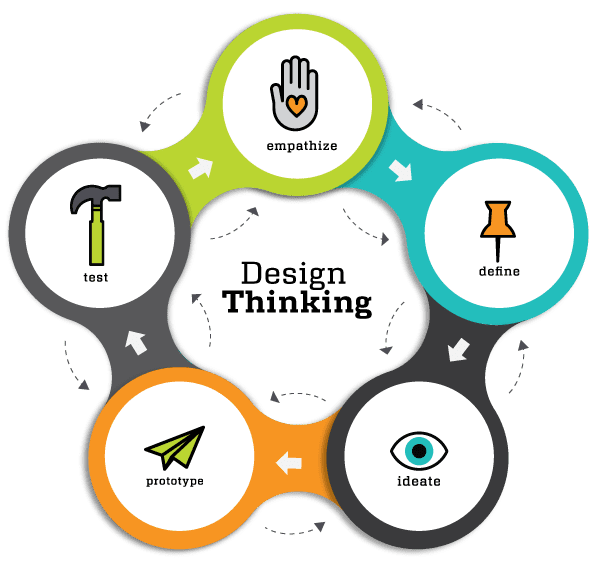
The Design Thinking process is typically broken down into five stages, although these stages are not always linear. The process is iterative, meaning teams may cycle through various stages as they gain new insights and refine their ideas.
1. Empathize
The first step in the Design Thinking process is empathy. This stage focuses on understanding the users and their needs by engaging with them directly. Through interviews, observations, surveys, and other user research methods, design teams immerse themselves in the experiences of the people they are designing for. The goal is to identify real pain points and gain insights into the problems users face.
Tools and Techniques for Empathy:
- User interviews
- Shadowing or observation
- Surveys and questionnaires
- Empathy maps
- User personas
2. Define
In the define phase, the insights gathered during the empathy stage are synthesized into a clear problem statement. This step helps frame the problem in a way that is specific, actionable, and user-centered. The goal is to define the core issue that needs solving, and to ensure that the team is aligned on the challenge.
A well-defined problem statement is often framed as:
“How might we [problem] for [user] so that [desired outcome]?”
Key Activities in Define:
- Analyzing data from user research
- Identifying key insights and patterns
- Creating a problem statement
- Defining the scope of the challenge
3. Ideate
The ideate phase encourages creative thinking and brainstorming to generate a wide variety of possible solutions. This is the time to think outside the box and consider all possibilities—no idea is too far-fetched at this point. The ideation phase is all about exploring multiple ideas and considering how they might address the problem defined earlier.
Techniques for Ideation:
- Brainstorming sessions
- Mind mapping
- SCAMPER (Substitute, Combine, Adapt, Modify, Put to another use, Eliminate, and Reverse)
- Sketching and visual ideation
- Design workshops
4. Prototype
Once a range of potential solutions has been generated, the next step is to prototype. This phase involves creating low-cost, low-fidelity versions of the solutions to test and refine. Prototypes can take many forms, from paper sketches to digital mockups to simple functional models. The goal is to create tangible representations of ideas that can be tested, evaluated, and iterated upon.
Types of Prototypes:
- Paper prototypes
- Digital wireframes
- Mockups or 3D models
- Storyboards
- Interactive simulations
5. Test
The final phase is testing, where prototypes are presented to users for feedback. This stage involves observing how users interact with the prototype and gathering insights about their experiences. Testing helps identify usability issues, refine the solution, and ensure that the final product will effectively meet user needs. It’s also common to cycle back through earlier stages if the feedback from testing suggests the need for further refinement.
Testing Techniques:
- Usability testing
- A/B testing
- User feedback and surveys
- Observation and interviews
Benefits of Design Thinking
Organizations that adopt Design Thinking can experience a range of benefits, including:
1. Improved User-Centered Innovation
Design Thinking ensures that products and services are developed with a deep understanding of users’ needs, preferences, and pain points, leading to more relevant and impactful innovations.
2. Faster Problem-Solving
The iterative nature of Design Thinking allows teams to quickly test and refine ideas. Rather than spending months or years on one approach, companies can fail fast, learn fast, and arrive at solutions faster.
3. Enhanced Collaboration
The collaborative nature of Design Thinking brings diverse perspectives together, leading to more creative ideas and stronger team alignment. It fosters an inclusive environment where all team members are encouraged to contribute.
4. Higher Success Rates for New Products
By testing and validating ideas early and often, Design Thinking helps mitigate the risk of product failure. Prototypes provide valuable insights into what works and what doesn’t before launching a final product, increasing the chances of success in the market.
5. Increased Customer Satisfaction
With its emphasis on empathy and user-centered design, Design Thinking ensures that the solutions developed address real customer problems, leading to improved satisfaction and loyalty.
How to Apply Design Thinking in Your Organization
To implement Design Thinking effectively in your organization, follow these steps:
-
Foster a Creative Culture
Encourage a culture of creativity and experimentation, where employees are empowered to think outside the box and challenge traditional solutions. -
Train Teams in Design Thinking
Provide training for teams on the core principles, methodologies, and tools of Design Thinking. This will ensure that everyone involved in the process is aligned and can contribute effectively. -
Promote Cross-Functional Collaboration
Create multidisciplinary teams that bring diverse skill sets and perspectives together. Collaboration across departments, such as marketing, design, engineering, and customer service, can lead to more innovative and holistic solutions. -
Iterate and Learn
Embrace the iterative nature of Design Thinking by constantly testing, prototyping, and refining solutions. Be open to feedback, and don’t be afraid to pivot if something isn’t working. -
Focus on the End User
Keep the focus on the end user at all times. Continuously engage with users, gather feedback, and ensure that their needs are at the center of your design process.
Conclusion
Design Thinking offers a powerful, human-centered approach to problem-solving and innovation. By putting users first, embracing creativity, and iterating quickly, businesses can unlock innovative solutions that not only meet customer needs but also drive sustainable growth and success. Whether you’re creating a new product, refining a service, or solving complex business challenges, adopting Design Thinking can help you achieve better outcomes and stay ahead in today’s competitive landscape.